Is a turntable ladder really faster than an aerial platform?
27 October, 2026Speed is one of the most common points of comparison between turntable ladders and aerial platforms in the fire and rescue industry. At first glance, the turntable ladder may appear to have the advantage: when measured only from the start of levelling to reaching maximum height, it can be a few seconds faster. But in real rescue operations, those seconds rarely tell the full story.
To understand what really affects operational speed, we spoke with Stefano Leporale, Sales Director for the Fire & Rescue segment at Bronto Skylift. According to Leporale, the decisive factors are not limited to movements at height. The vehicle must first reach the incident scene, find a suitable position, level safely and prepare for the mission. These phases take minutes rather than seconds, which makes them far more important to the total duration of an operation.

Getting to the Scene: Driveability Matters
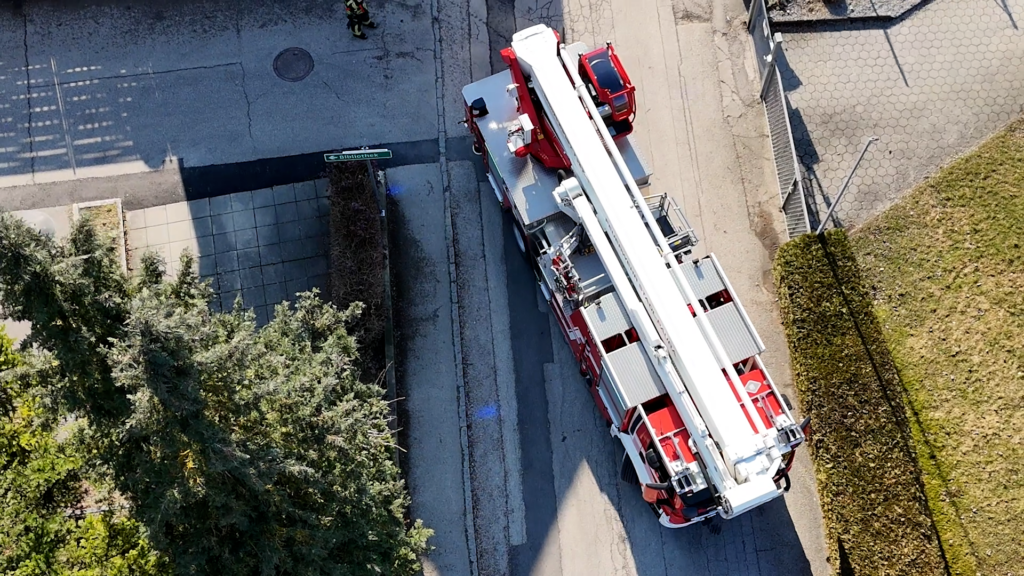
In urban operations, the ability to move quickly and safely through narrow streets can have a major impact on response time. The Bronto F32TLK is approximately 29 feet long and has no front or rear overhang. A compact turntable ladder, by comparison, is about 32 feet long and carries its cage in front of the cab. This can mean over 30% larger turning radius, which is a major disadvantage when driving in urban environments. The overhanging cage also obscures the driver’s field of vision, making corners more difficult to judge, which slows down driving and increases the probability of collisions.
“As an example, we did a back-to-back driving test in a typical European town. A ladder could not follow the F32TLK around a street-corner garage. The turntable ladder had to reverse to the previous street, turn around and arrived minutes later at each destination. In that context, a few seconds of theoretical setup speed quickly lose their relevance,” explains Leporale.
Finding the right position faster
On arrival, crews still need to find the right operating position. The vehicle must be close enough to reach the target, clear of obstacles for safe levelling and positioned in sometimes tight slopes or narrow streets.
“A larger and more flexible working envelope and bigger levelling capacity reduces the need for time-consuming vehicle repositioning. This is where outreach under real working load becomes important,” says Leporale.
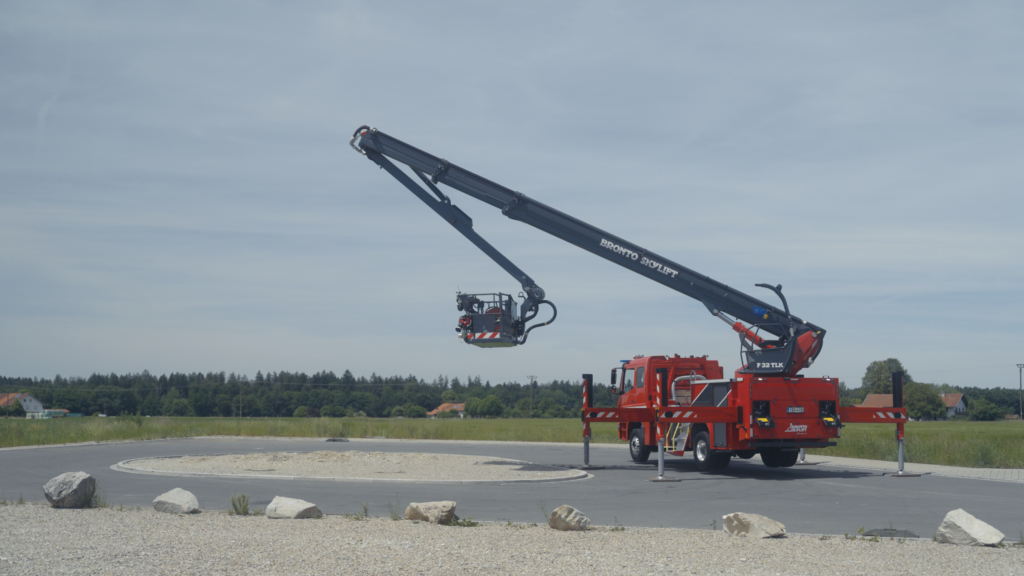
The F32TLK can carry 1100 lb to 67 feet outreach on a 16-tonne chassis, or 72 feet on an 18-tonne chassis, or 75 feet on a 19 tonne chassis. By comparison, similar turntable ladder figures are lower, and some maximum outreach values are achieved only with an empty or removed cage — a condition that does not reflect real life rescue work.
“In our side-by-side testing, a turntable ladder failed to reach the target building even with only a 200 lb cage load. The F32TLK reached the same target with 1100 lb in the cage. Furthermore, the platform was also able to reach the building on the opposite side of the street without being moved, which speaks volumes of the working envelope,” continues Leporale.
Larger working envelope and operational geometry further support fast placement and enables placing the vehicle closer to the buildings on narrow streets.
“The main boom angle of a F32TLK can be up to 85 degrees, whereas a typical ladder has maximum angle of 75 degrees. In real life this means that the ladder needs several meters more distance from a building’s wall than the platform, which makes it faster and easier to find position for a platform in various circumstances,” states Leporale.
“Furthermore, the overhang of the ladder’s turntable is much bigger, which needs additional space and narrows down the placement options,” Leporale continues.
Additional placement advantages of a platform include levelling over slopes and obstacles due high levelling capacity. With a continuous 360° rotation of the turntable, crews can position the unit more freely and work effectively even in restricted spaces. “Crews simply have much more flexibility to position a platform than placing a ladder. The flexibility saves a lot of time and reduces the need to re-position the vehicle at site,” concludes Leporale.
Doing more once the vehicle is set up
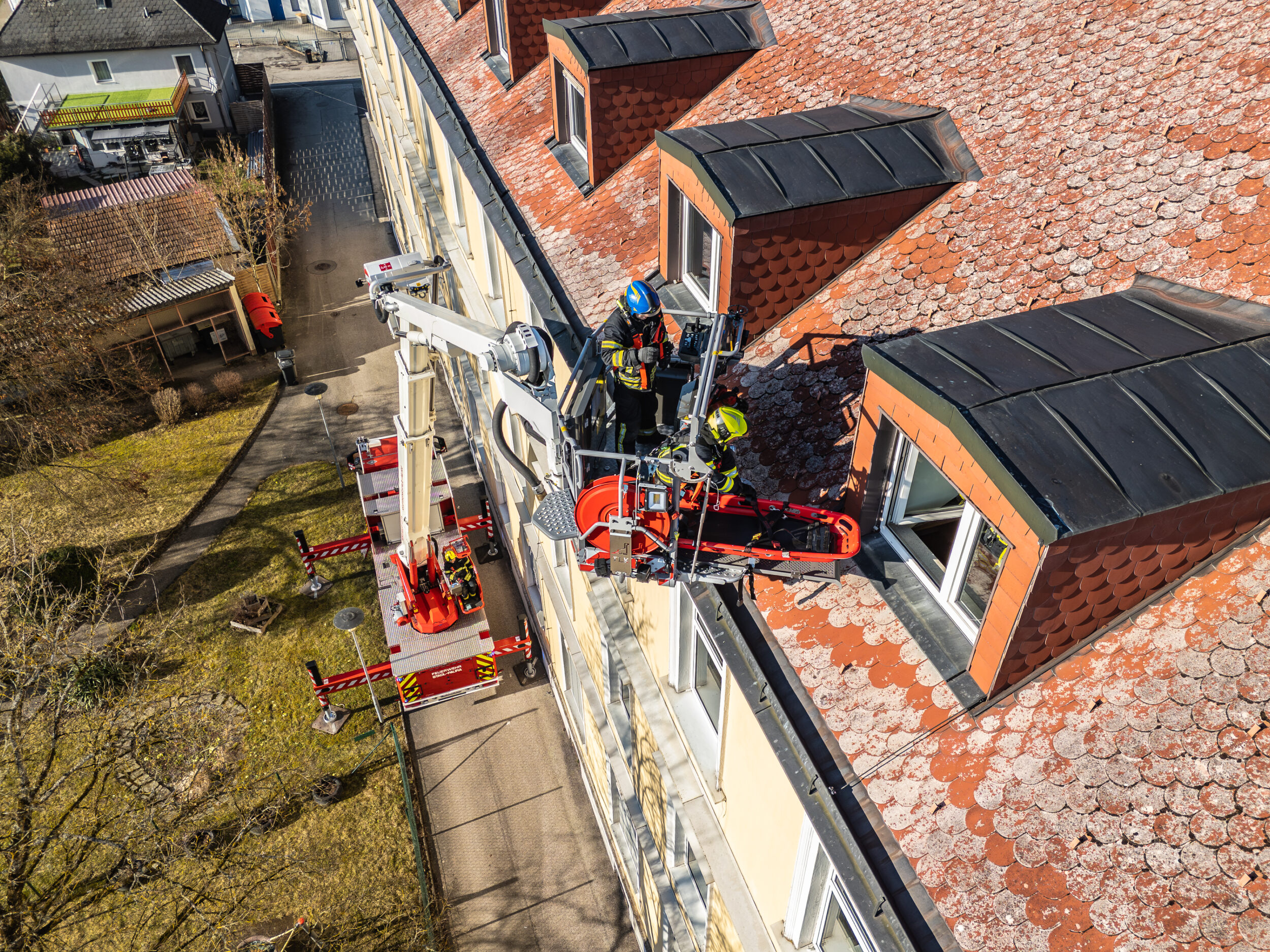
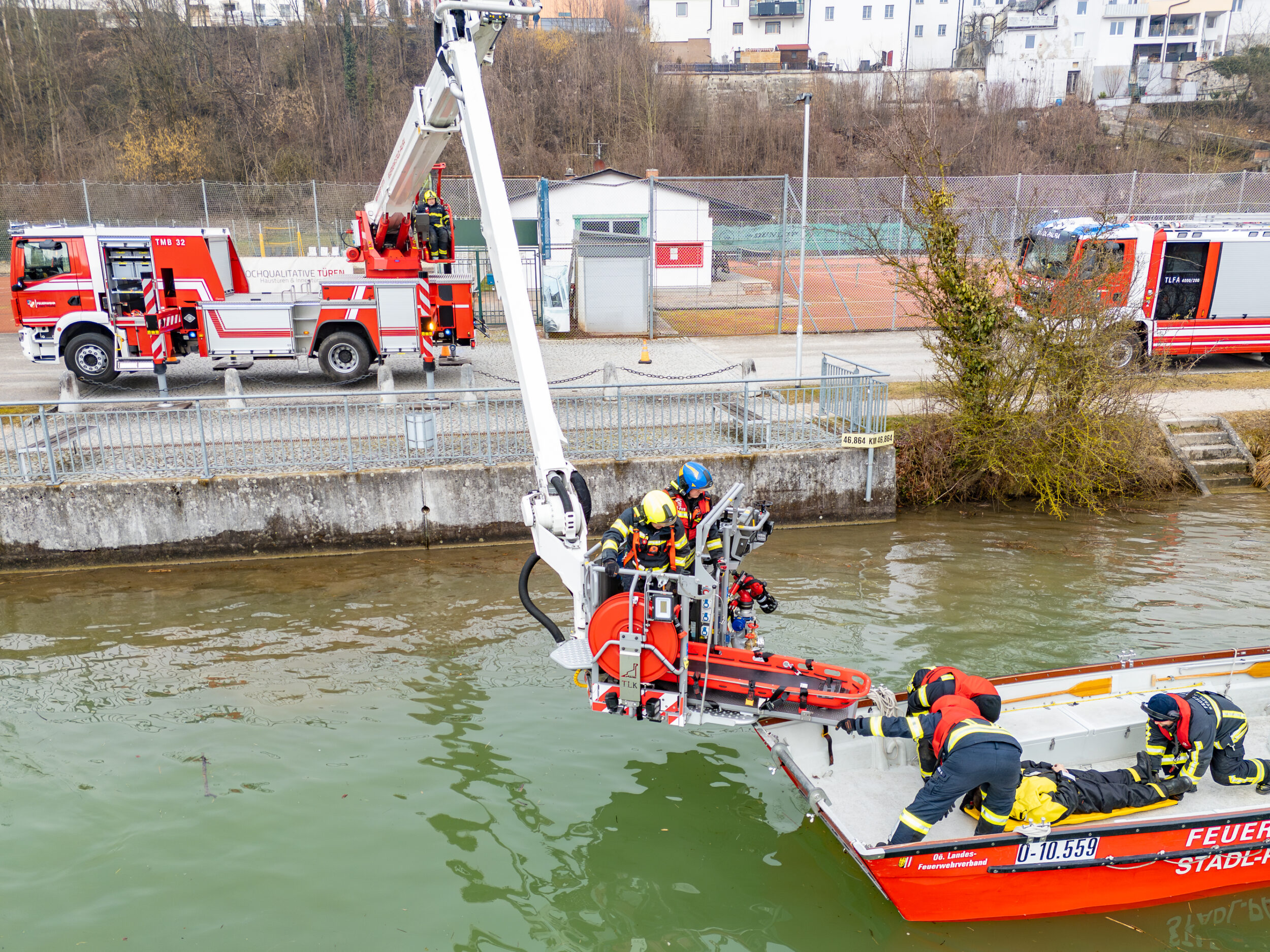
Operational versatility is another factor that influences the real speed of a mission. The F32TLK cage measures 6,8″ × 3,2″, providing 2.1 m² of floor area, plus a 0.62 m² foldable platform. It can travel fully equipped with a fixed stretcher carrier, handline, breathing-mask locker and tools. A turntable ladder cage folded over the ladder pack cannot be pre-prepared in the same way, which means crews may lose time equipping it on scene.
In patient transport, this difference can be especially important.
“Based on our experience a big part of deployments involves patient transport. When you have enough room and readily equipped cage, you don’t need to waste minutes pre-preparing the rescue,” states Leporale.
The cage slewing range helps close the gap to balconies and windows, reducing fall hazards and enabling faster access. Rescue fittings also support efficient operation: the platform includes space for medical staff and direct wheelchair access without dismantling front cage components.
For firefighting, the platform’s integrated waterway from ground level to the cage can deliver 660 GPM output, compared with a typical 330 GPM output of a ladder. Boom movement remains unrestricted while water is flowing, and the monitor can be operated from the turntable or by remote control. This allows extinguishing to continue even when no crew is in the cage or booms need to move while extinguishing.
The F32TLK also maintains over 16 feet of below-grade working capability, adding flexibility for rescues or operations below street level. TTL can also reach below ground level, but they need to combine articulation and minus degrees on ladder set to gain approximately 16 feet of down reach.
“The platform has much longer cage boom section that can be used over 16 feet below grade anywhere from 26 to 65 feet of horizontal outreach. A ladder needs to extend and lower also the main ladder section to gain the same, which means that max down reach is achieved 65 feet away from the unit which significantly reduces the working envelope and may lead again to time-consuming reposition needs,” states Leporale.
The bottom line
A turntable ladder may win a narrow timing comparison when only the movement from levelling to maximum height is measured. But real operations are broader than that. Response speed depends on how quickly the vehicle can reach the scene, how easily it can be positioned, how efficiently it can be operated and how much work it can complete once in place. In those practical conditions, the aerial platform offers a more complete answer: faster to arrive and deploy in real environments and more versatile at height.
“Both vehicles for sure have a place in fire fighters tool kit, but the speed myth should be re-defined to reflect real life rescue scene instead of academic comparison,” concludes Leporale.
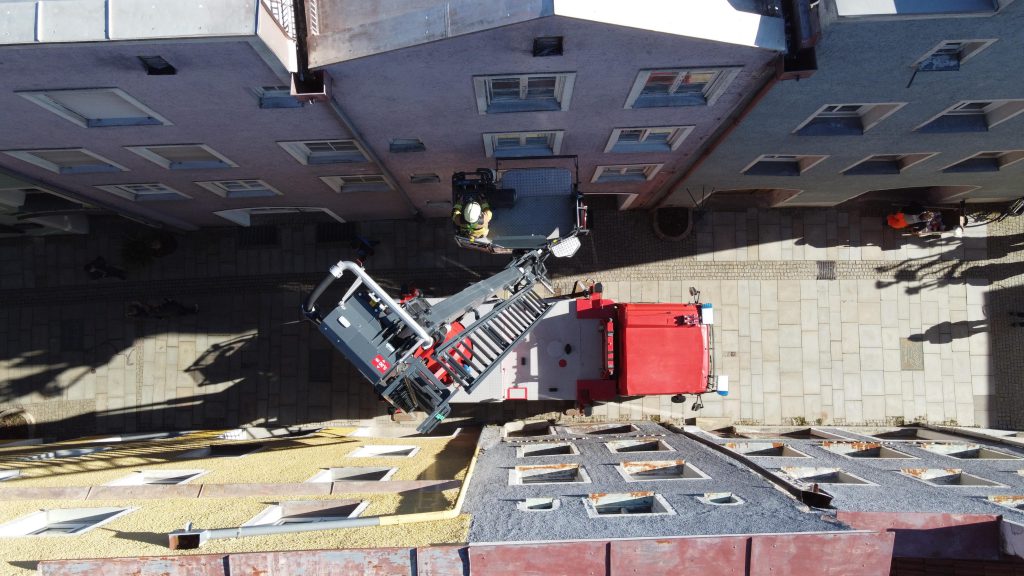
Delivering versatile aerial firefighting and rescue in Austria
The Stadl-Paura Volunteer Fire Brigade in Upper Austria operates in a region defined by dense development, narrow access routes, older buildings, waterways and a wide range of technical operations. The brigade needed a vehicle that combines reach with flexibility and versatility in every direction. With over 25 years of experience working with Bronto Skylift, they found their solution in a Bronto F32TLK aerial rescue platform that fulfils the challenging demands of their operating environment.